
At the Cape Coast Slave Castle
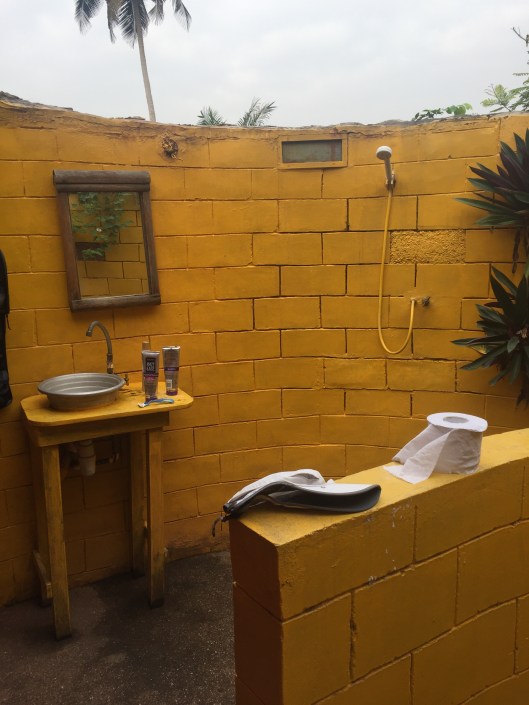
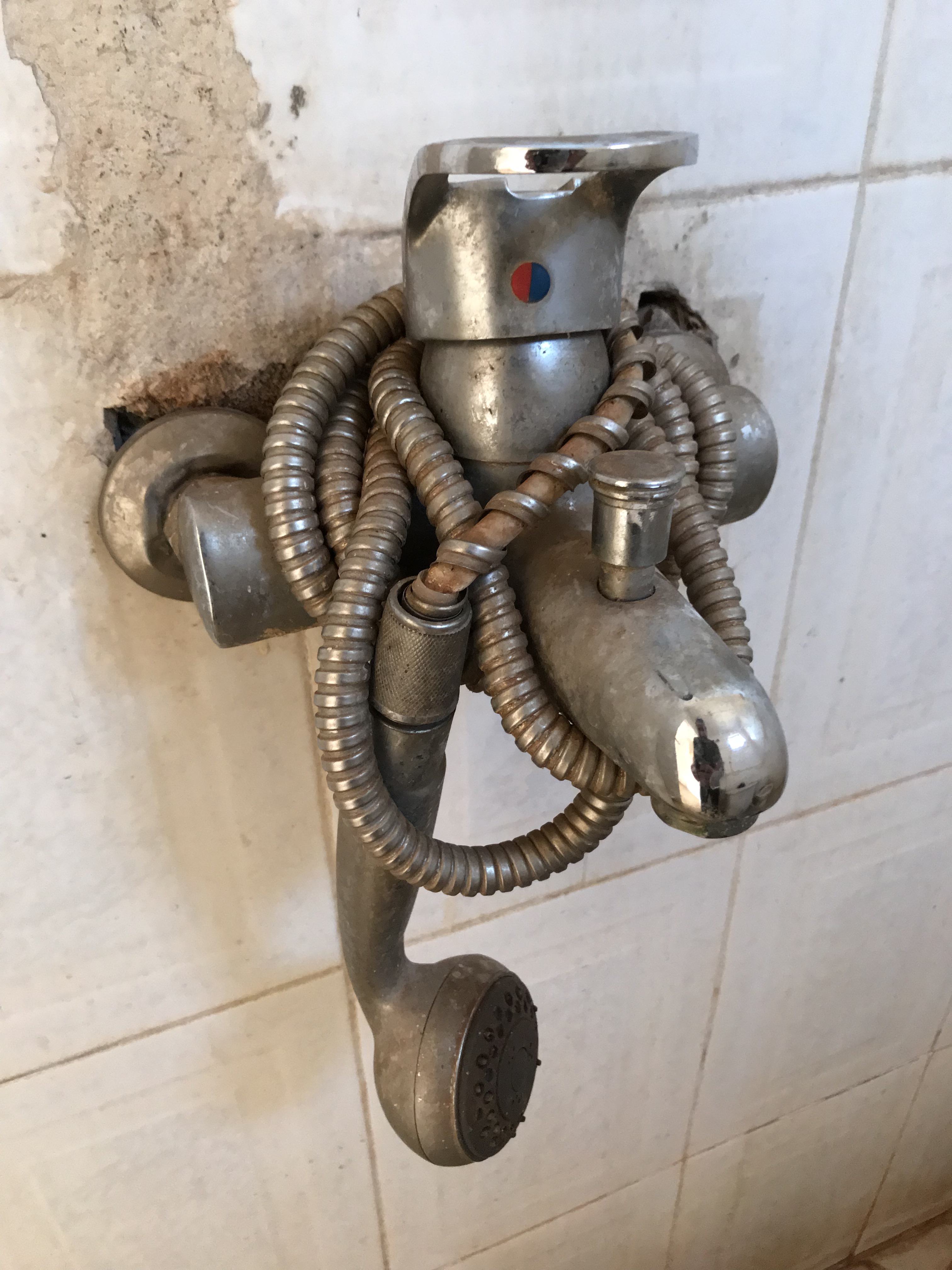
The next morning I said goodbye to my lovely hut and outdoor toilet to get back on the truck and head east to Cape Coast. I did love my room, however, I had to employ a technique there that I hadn’t used since 2009 when I was in Nicaragua during a particularly hot and muggy spell of weather. Without a fan, which is really essential in the heat of the night, the only way one could fall asleep would be to get in the shower and get completely soaked with cold water, and then lie back down on the bed still wet and try to fall asleep before you dry off.
That technique helped me to fall asleep the prior two nights in Elmina.
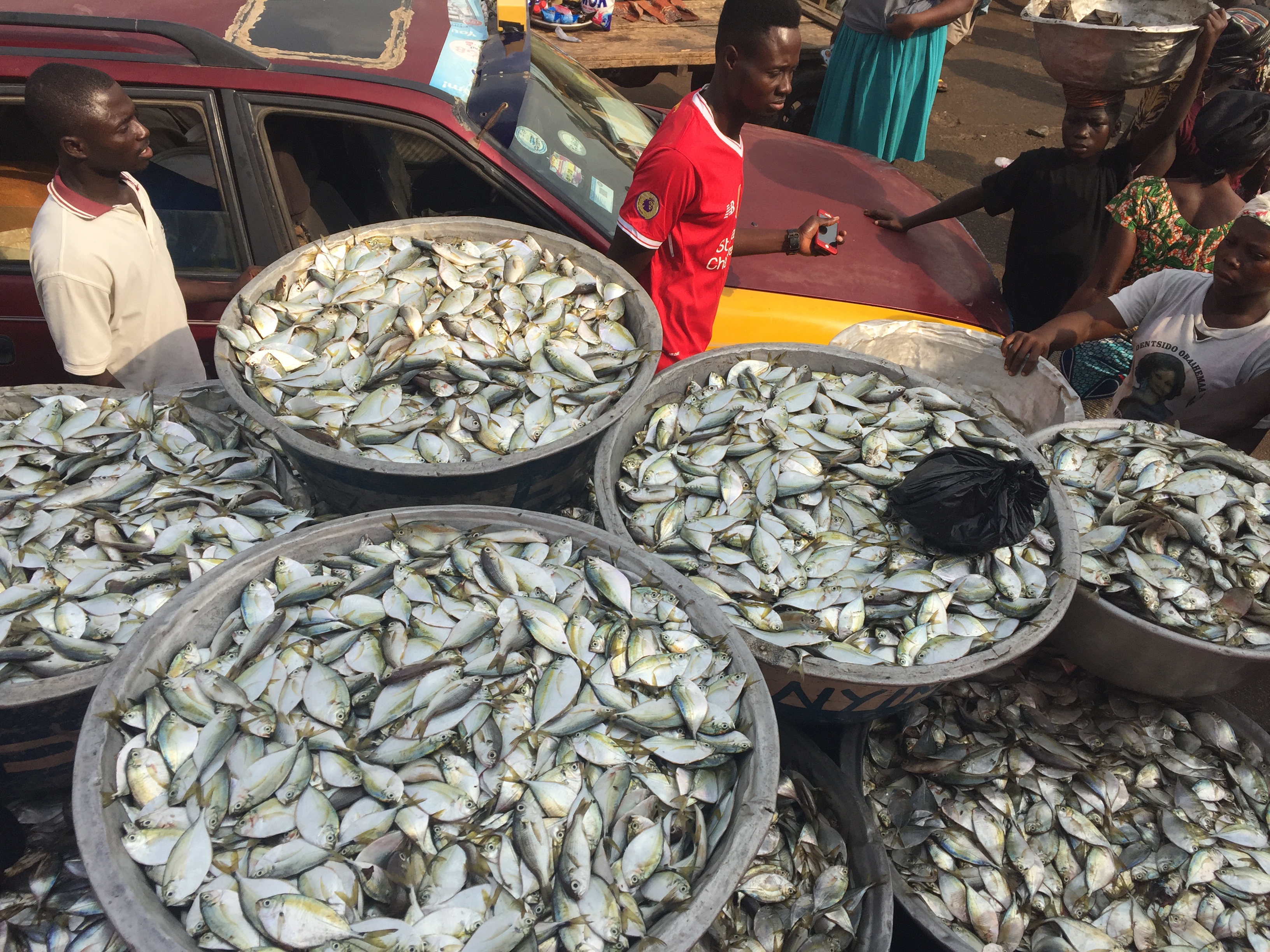
Morning in Elmina at the market
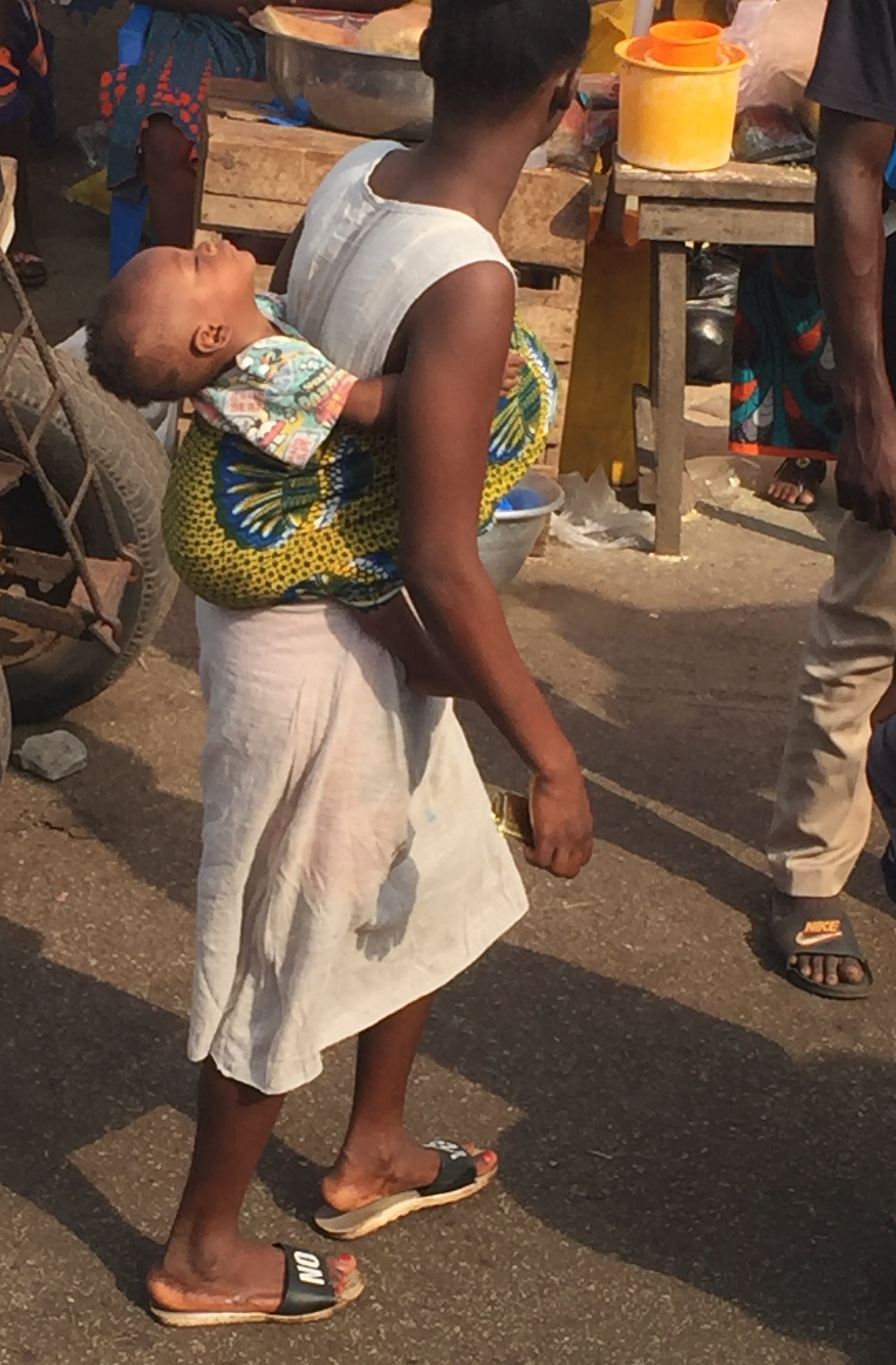
Baby asleep with head all the way back while carried by mama

Woman carrying massive ice blocks on her head…Because, Africa.
Our journey out of town had us passing the exact same busy thoroughfare that me and the boys had walked the night prior – though being morning, it was even busier than what it had been. From our unique vantage point aboard the truck, it was super easy to get great photos of people passing by carrying massive baskets of fish, produce and other wares to sell in the market. The boats were heavily laden and still bearing their colorful paints and biblical names – headed out to sea as we drove by.
One of the amusing things about Ghana, given its dominant Christian makeup in the south, is that so many small businesses name their storefronts with a religious title. Here are a few examples of the names we saw along our journey:
“Thy Will Be Done Licensed Chemical Shop”
“Life in Christ Radiator Specialist”
“Merciful God Vulcanizing”
“God is My Provider Aluminium Works”
“If Jesus says yes, no one can say no market”
“God is Alive Curtains Internal”
“Charity begins at home drinking spot”
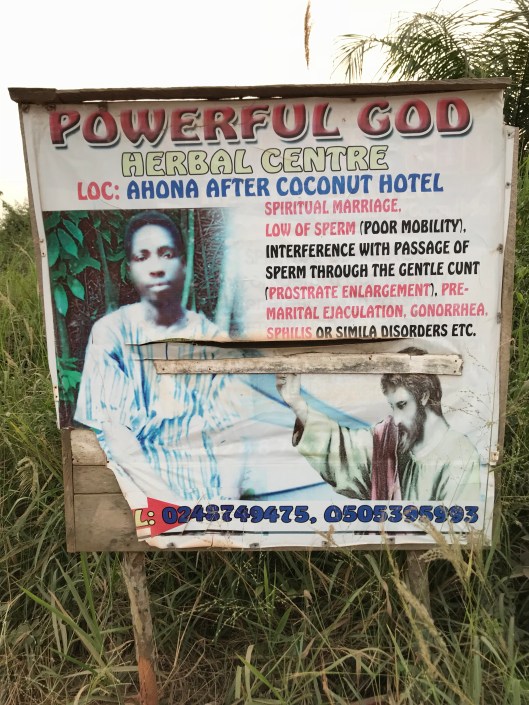
This defies belief. Hence, photo.
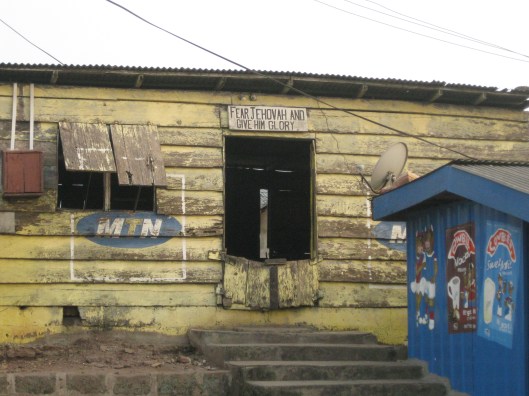 Special thanks go out to Mike for keeping a log of these gems.
Soon we got to Cape Coast Castle and unloaded for our tour of this castle – different to Elmina in that it was built specifically for the slave trade in 1610 and opened in 1653. On entering, we immediately saw the plaque commemorating the visit that Barack and Michelle Obama made here back in 2009.

Cape Coast Castle courtyard

Female Dungeon
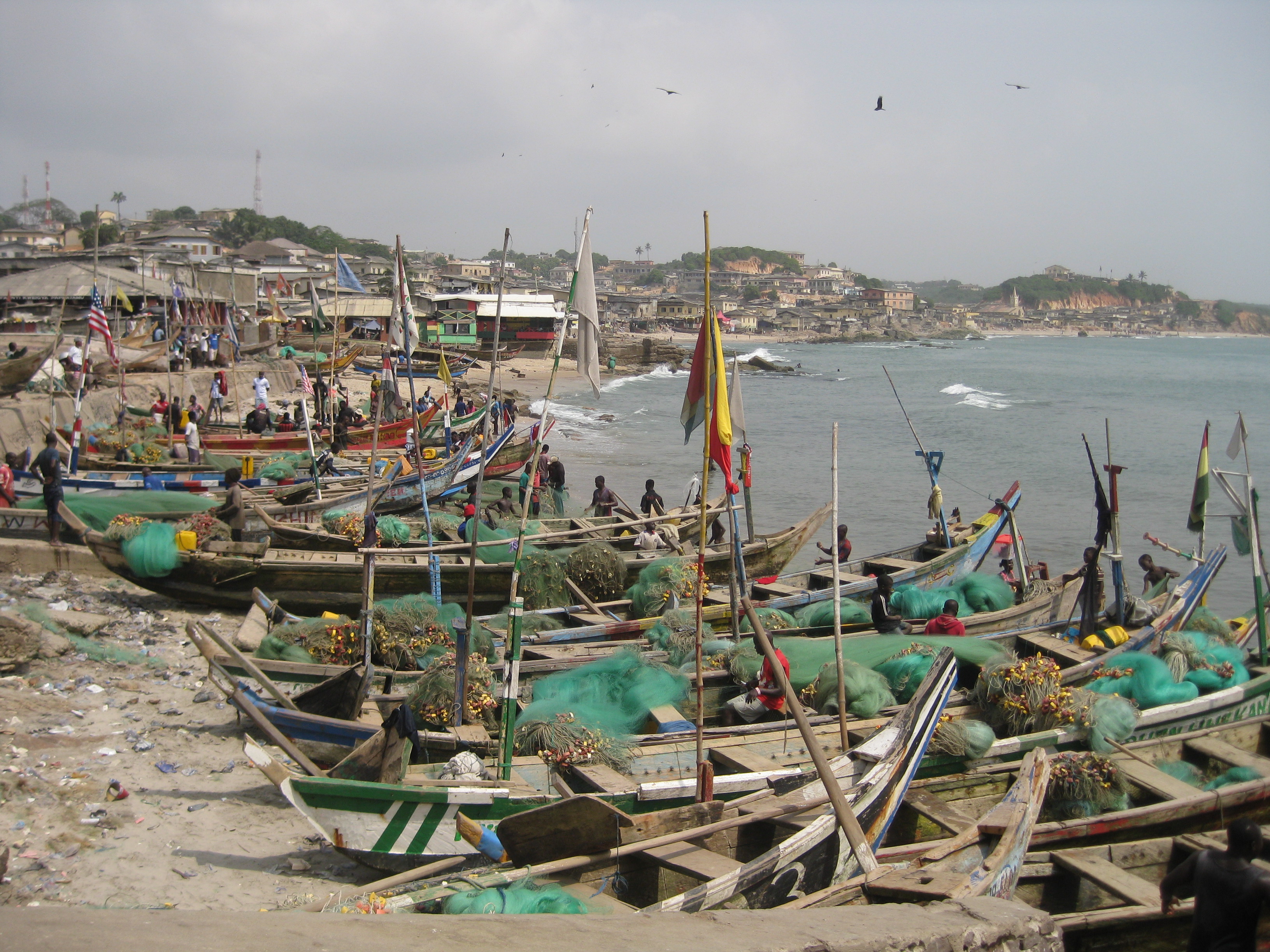
View from other side of Door of No Return…where the ship would pick up the slaves passing through it.
 The visit was just as haunting as my visit to Elmina, so I won’t recount my reactions here except to say that we were given a lot more free time to explore once the tour was over and I chose to go back into the dungeons alone and stand quietly in the darkness.
Even just in comparison to being down there with the group, the forboding and eeriness was far more palatable when I was alone and it was difficult to imagine the untold stories of suffering that were contained in those walls.
One item I failed to describe in my last post was the treatment of women in the female dungeons as sex slaves. This was true in both Elmina and Cape Coast. The governor, or any soldier residing in the castle could choose a woman to rape whenever he wanted. The women would be marched out of the dungeon and selected from a balcony overlooking the courtyard. She would then be washed thoroughly and brought to her captor to be violated.
On the one hand, if chosen, you’d be raped. On the other, you finally got to bathe.
I know, not funny, and I don’t mean it to sound trite.
Many of these women became pregnant and would be taken from the dungeon to a separate building to give birth and then wean the infant, only to have it taken away from her once it could eat solid food. She would then be returned to the dungeons or put on a slaver ship. Later on, these “Mulatto” (their word, not mine) would be given an education in specially built schools and many went on to be leaders in the slave industry – seen as more elite and superior than their darker countrymen.

With Wayne and our guide
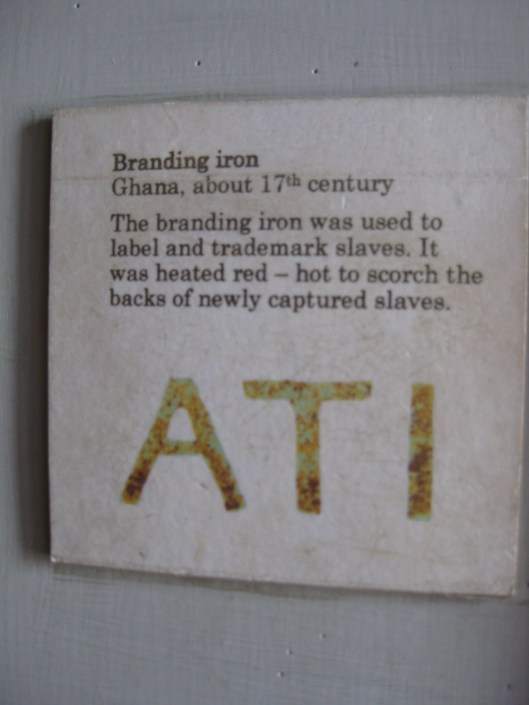
In comparison with Elmina, Cape Coast did house a well-curated museum regarding the slave trade and it’s impact on the New World and African American culture today. There was even displays of the branding irons that owners would use to be able to identify their “property” and visual representations of the inside of the slave ships with gut wrenching diagrams of how people were stacked.
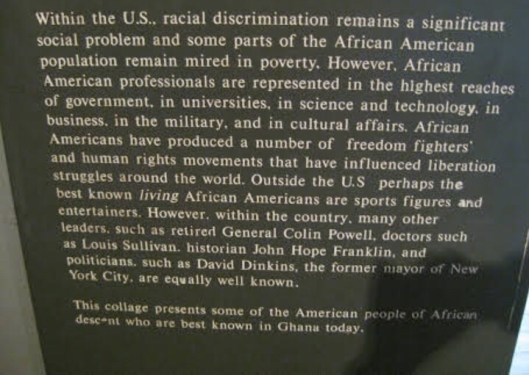
I especially liked the room that chose to honor those African Americans who’s roots can be traced to those once in bondage and give credence to their accomplishments and continuing fight for equality. I will include a few of the pics I took here below.

Branding iron used on Slaves to mark as property…this one of the ATI company

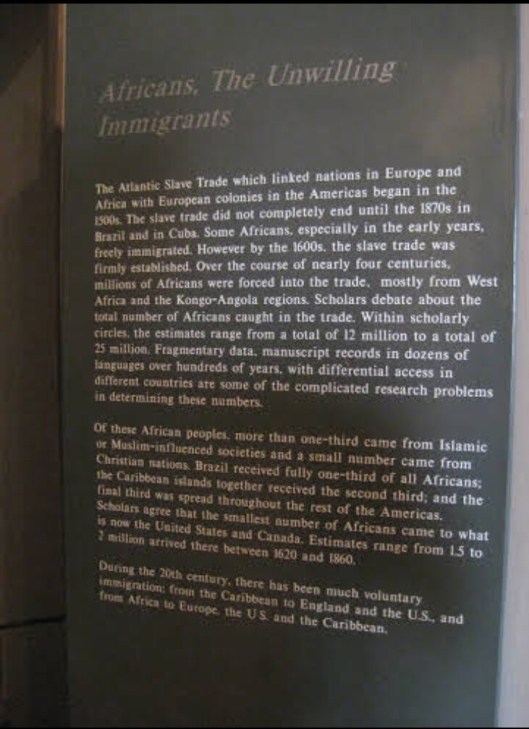
 After the visit we had only a short journey north to Kakum National park where we would be dividing into groups and hiking into the jungle for a night up in the tree canopy in the treehouses that offered a pretty unique place to sleep.
While waiting for dinner, Mike had the misfortune to step onto a wooden platform that completely gave way causing him to puncture his foot with something metallic, perhaps a nail. Watching him go down was initially quite funny until we realized that he was hurt – but after getting some alcohol to clean the wound and a bandaid…he still managed to power through and do the hike with us.
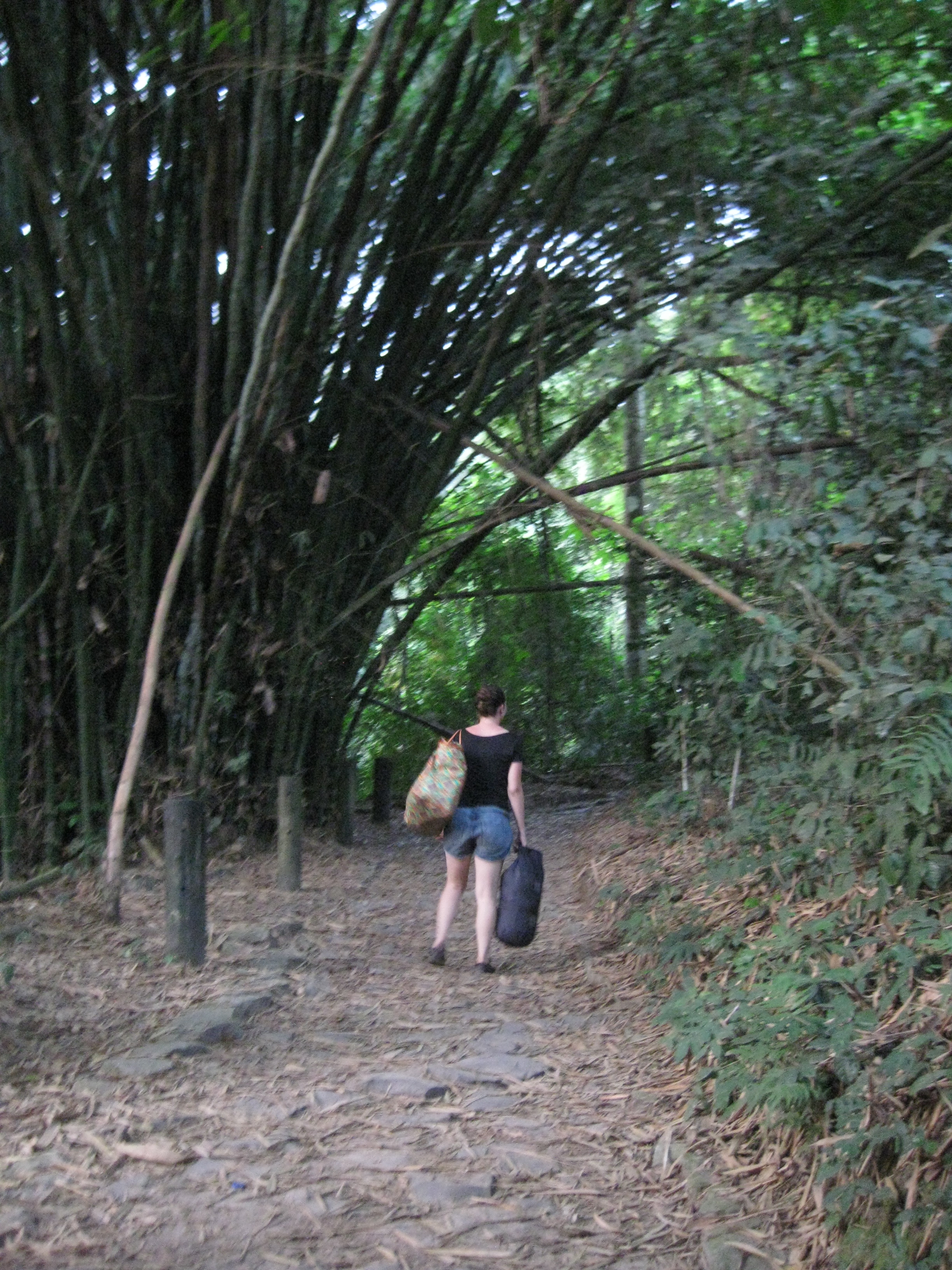
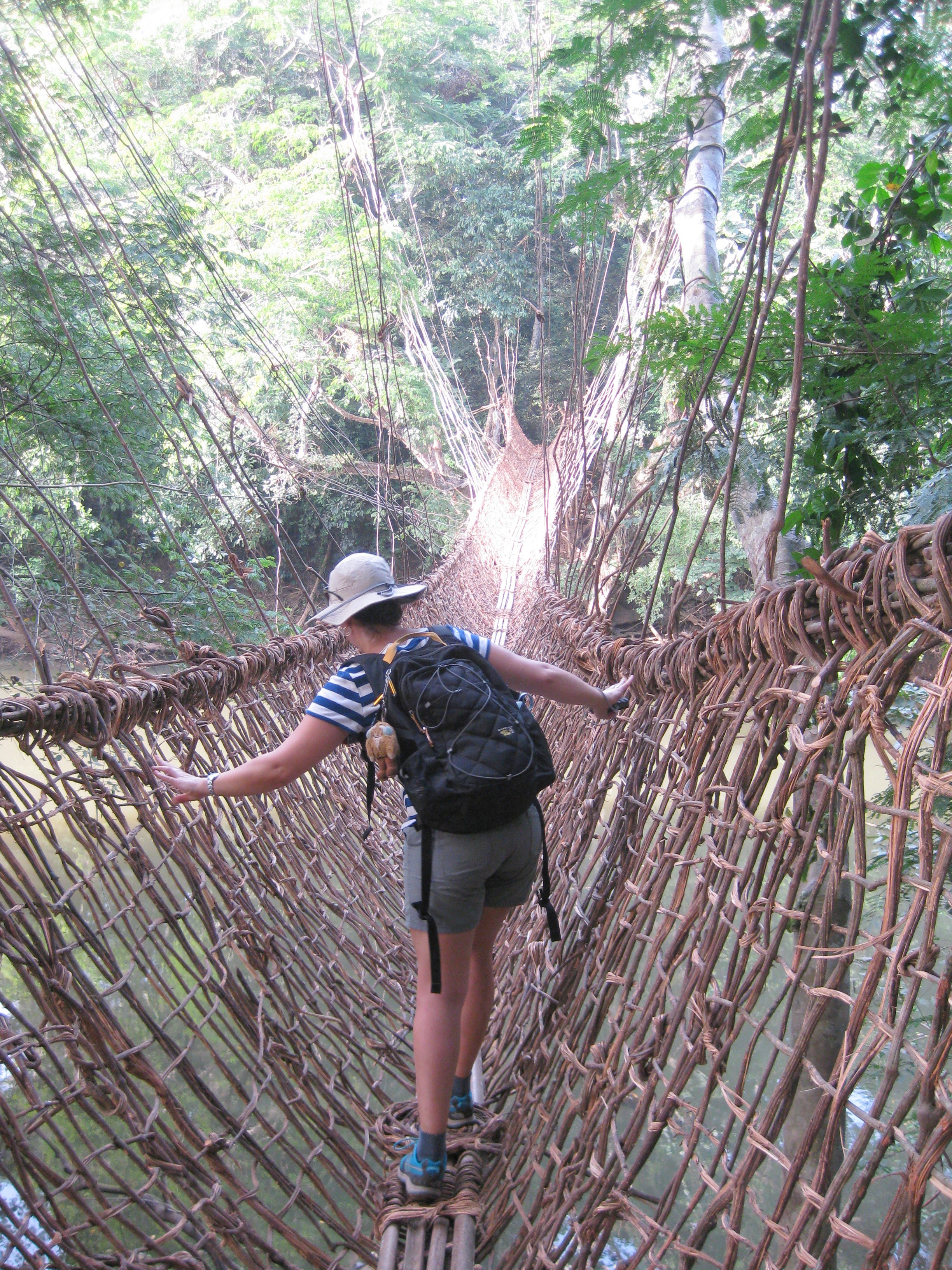
Sinead hiking to our Treehouse in Kakum National park

Treehouse in Kakum National Park
Kakum is home to a number of species including the pygmy forest elephant – but we were advised to keep our expectations very low for what wildlife we might be able to spot in the short time we were visiting.
The hike in was very easy and took just over an hour. It’s funny to me how much hikes are always made to seem so difficult and that they require such physical stamina by the hosts in countries where I am visiting – I guess it must mean that their average tourist is simply very out of shape because I find them to be generally quite tame despite their arduous descriptions.
There were around 14 of us staying at the treehouse that was a little bit of a further trek away – and in looking up at the structure, I did wonder just how safe it was for that many people to make it home for the night. Several people just brought their tent with them, but the rest of us made it up the eighty or so steps, trying not to think about how difficult it was going to be to have to come back down in the night to pee.

View from the forest canopy walk in the early morning
We formed sleeping mats in a circular fashion on the floor around the hut and tried to get set up for what was going to be an early night. After a well deserved Smirnoff Ice (Mike and I packed a few in that managed to stay cold) we headed out for a Night Walk with our guide, Sammy.
The night walk was mostly about hearing the sounds of the jungle and animals around you. It’s funny how without a headlamp, you can easily just be convinced that every creature is out to “get you”, when in reality, it is very difficult to spot wildlife with headlamps. We did get to hear the Hyrax – a rodent that is actually a genetic relative of the elephant make extremely high pitched sounds as they came down from the forest canopy to forage for food. We also managed to spot several bush babies, millipedes and an errant moth who wanted to fly into my bra for some reason – to which I emitted a rather loud shriek which in turn was received with various forms of mocking.
Overall, the experience in Kakum was fun and unique – if not exactly for its wildlife encounters then for its atmosphere.

Walking the canopy just after sunrise
In the morning, we did a walk through the upper tree canopy by walking along hanging bridges that were built from platforms to platforms. It was an early start at 0530, but how often do you get to see the sun rise from a tree canopy in a National Park in Ghana?
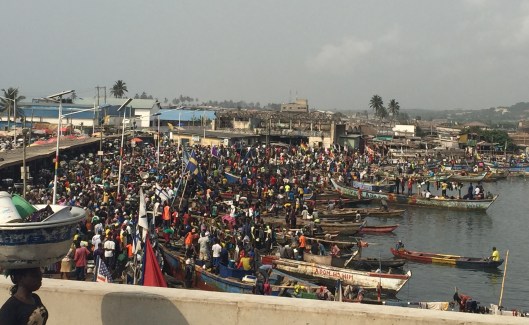 Elmina had not really been touted as a destination in and of itself by the Dragoman Itinerary or trip description. In fact, almost nothing was mentioned of its stunning harbor that dramatically juxtaposed alongside its famed Slave Castle that I had read about when I was a teenager in high school.
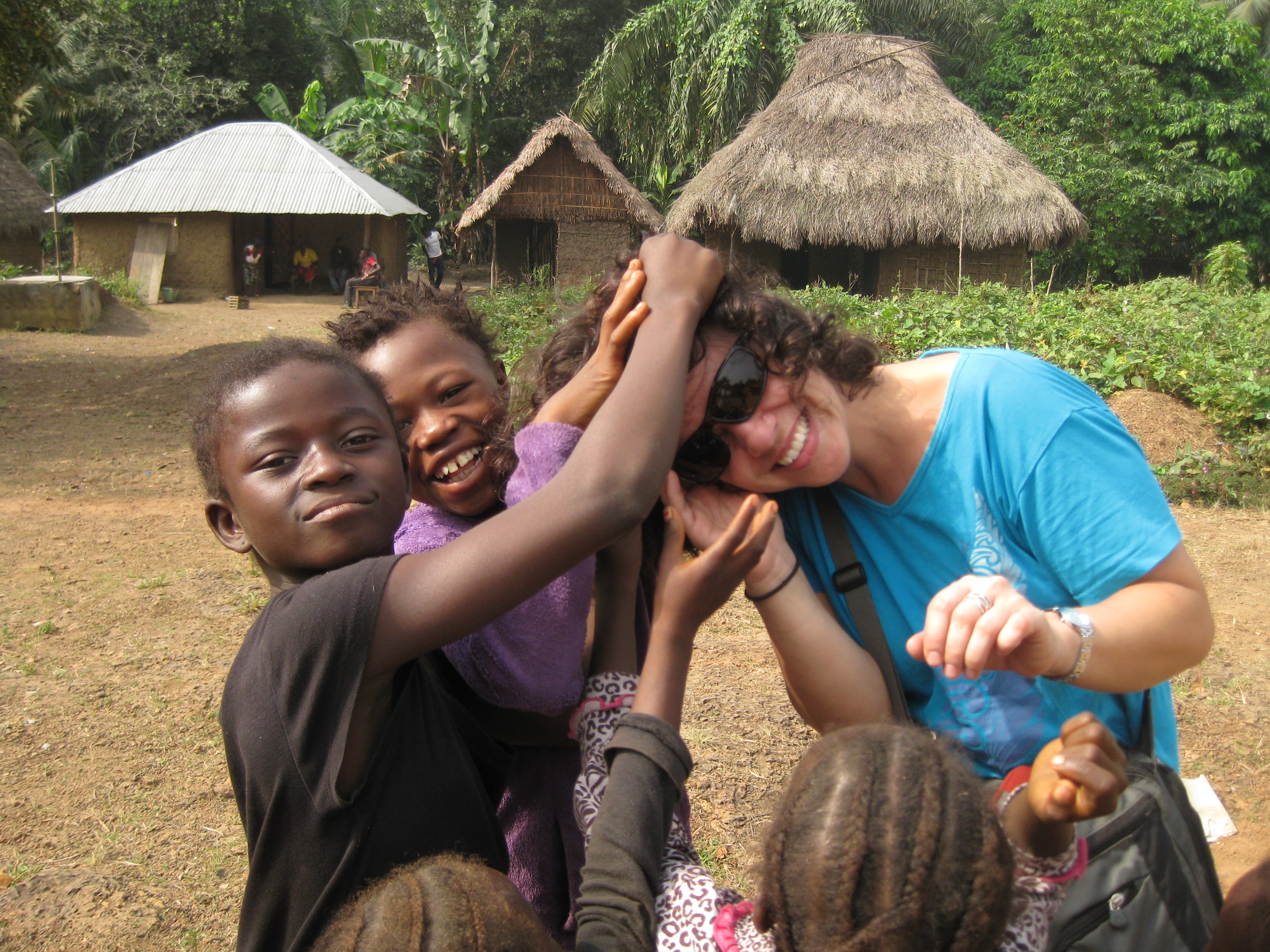
 The next school was far more moderate and struggled with class sizes of over 70 or 80 kids. It felt like we were diverting the children’s attention from their classwork, and so the visit didn’t sit well with me at all. In addition, these kids were some of the most aggressively “friendly” of any crowds of kids I’ve come across on this continent. When trying to leave, they practically clawed, scratched and grabbed at me to get physical hold of me, along with pulling off my hat and grabbing my hair. I didn’t appreciate that at all.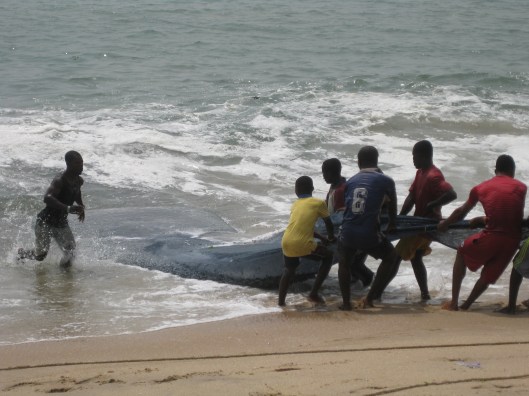
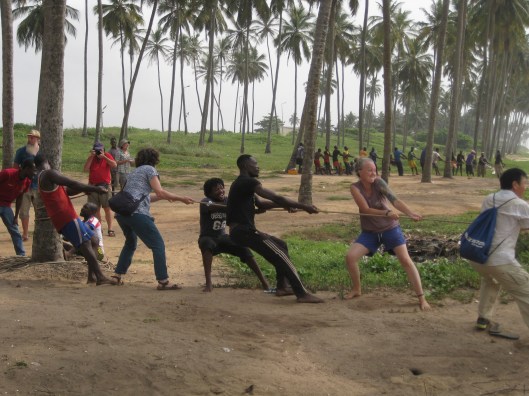
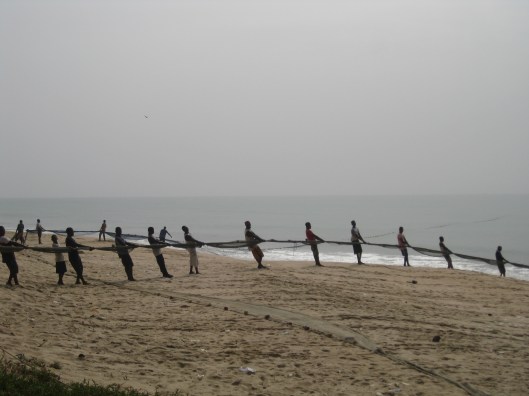 One highlight of the visit, however, was that this school itself sat on Elmina beach where a local team of fishermen just happened to be pulling in the day’s catch when we were there. It was a spectacle to witness as the men sang songs and clapped in time to create the unity and coordination necessary to pull in the thousands of tiny fish in their nets ashore. I managed to get a good video of the event which I will include here.
 Once we’d eaten, it became quickly obvious that there was so much here to see and do and the photographic opportunities in Elmina’s gloriously colorful harbor full of life, locals, and fishing boats coming in and out of the harbor demanded that the rest of the day be spent here.
 I managed to convince Mike and “Precise” Peter (aka Pipi Lou Lou) to come along with me for the $9 tour of the castle and we further planned to make our own way walking all the way back to the beach that housed Stumble Inn and our accommodation for the night.
 Our guide was incredible, thorough and managed to infuse just the right amount of humor when it was needed so as to not detract from the serious nature of our visit. He did a wonderful job of giving us the preliminary world history that set the stage for the slave trade to begin in the first place – namely the decimation of Native Populations in the Americas due to European-introduced diseases, the noteworthy observation of the physical strength and working characteristics of the African people and a backdrop of inter-tribal warfare that set the stage for the creation of the slave trade, which was, in large part started by Africans enslaving other Africans in exchange for weapons to fight.
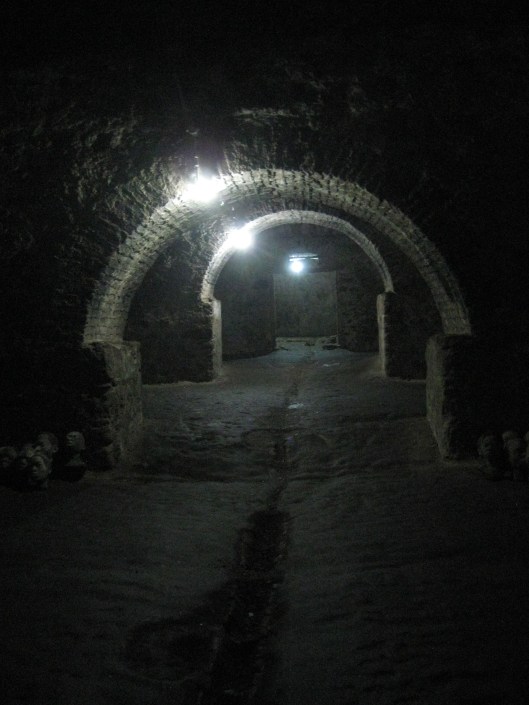
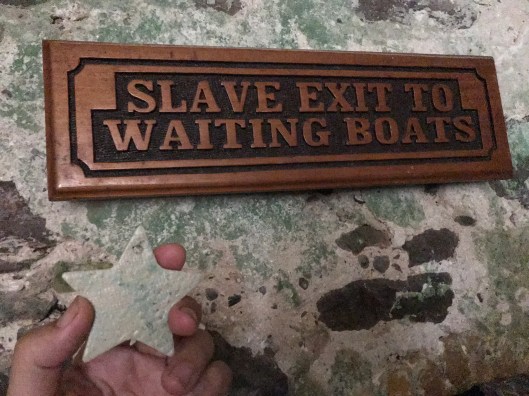 For almost 400 years – men, women, and children were brought here against their will, separated, thrown in dungeons where a process of elimination would begin and only those “surviving” these harshest of environments would then be subjected to the grueling and inconceivably inhumane Atlantic crossing to their eternal servitude.
 A drainage system had been built into the floor but it was obviously not adequate to eliminate all waste. The stench must have been beyond imagining. In addition, the guide explained that if you wanted to sit or lie down, you would have to get the agreement of whomever you were chained to – and often this person didn’t speak the same language as you and moreover – he might have been from an enemy tribe. Sometimes, your chained partner would die and they would have to wait for a guard to find that person dead before removing him and throwing him into the ocean.
 The Portuguese were replaced by the Dutch who were then replaced by the British who did the heavy lifting during the slave trade at Elmina. It made me sick to my stomach when after visiting the dungeons we visited the floor directly above the dungeons where the British soldiers had built a church directly over the heads of the persons they were enslaving and torturing. How a person could sing a hymn in praise of Christ with that misery below is beyond my comprehension and it filled me with rage.
 If not more upsetting, above the church was the stunning floor that was the Governor’s quarters – palatial and airy with an incredible 365 degree view over Elmina harbor, the beach and the blue ocean – the color of which most of the slaves marched here never even set eyes upon.
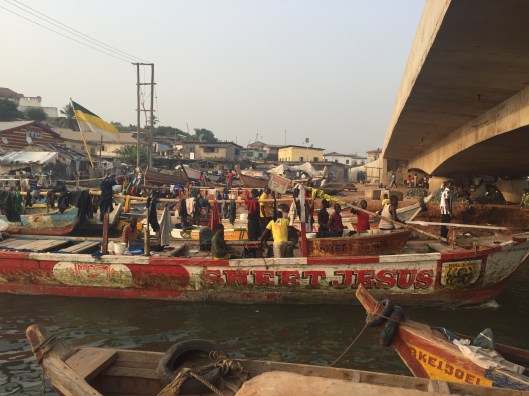 Once we left the castle – we were literally blown away by further exploration of the bustling life that was to be observed and photographed in the harbor and along the busy main street that marked our path back to the Inn.
 As the sun started to glow a little lower on the horizon, we took a daring early turn to the beach hoping against hope that we might be able to take advantage of the beach “wall” that had been created that year to help prevent shore erosion, but that also happened to provide a rather unique way to walk along the beach back to our accommodation.
 I felt especially full and joyous from the day’s learning, and experiences. I would highly recommend Elmina to anyone visiting Ghana – just make sure you have longer than the one day we had!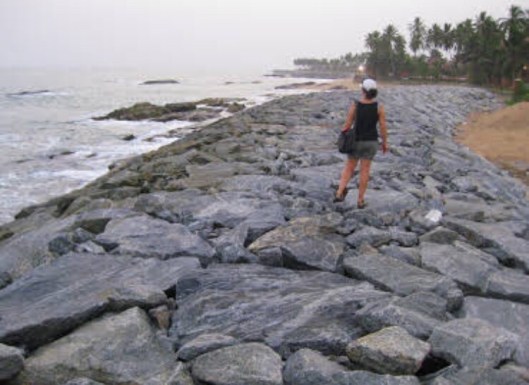
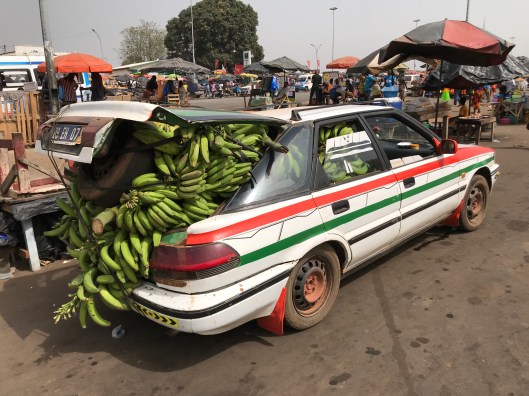 Tuesday the 9th turned into a super long, hot, and frustrating day of driving with a long sweaty border crossing thrown in for good measure. The guards at the Ghana border were quite funny though and kept telling us that all was good because we could finally stop having to talk in French and speak English again. “This is Ghana! We speak English here!” they kept saying.
 We stopped at a market to do cook team shopping and I caught sight of an exact replica of the very first car I drove – a 4-door Silver Renault 5 from the early 80’s. I had a photo standing next to it and for some reason, it made me feel rather nostalgic.
 The reason for my stress was quite a personal one but I will share it here as I will surely look back upon it with relief rather than embarrassment. The truth was – my monthly flow was severely overdue and I had finally broken down and bought a pregnancy test. Due to the stress I’d experienced prior to my departure, my last menses was extremely light – and that fact combined with the calculation that I was now 18 days overdue had caused me to become completely paranoid that I might be pregnant. That is not something I would wish upon anyone traveling on an overland truck in West Africa. Denial was proving to be much more than a river in Africa, and I had been putting this off for days now – convincing myself that there was no WAY I could be pregnant with my ex’s baby given the fact that I have an IUD – and ignoring the fact that I had been throwing up in the morning the past few days and feeling more bloated and emotional than possibly any other time in my life.
 Thoughts of what it would MEAN if I were pregnant had been haunting my every waking moment for days and it was my friend Jack who convinced me after I’d broken down crying to her in Grand Bassam that it was time to buy a test and just find out for sure.
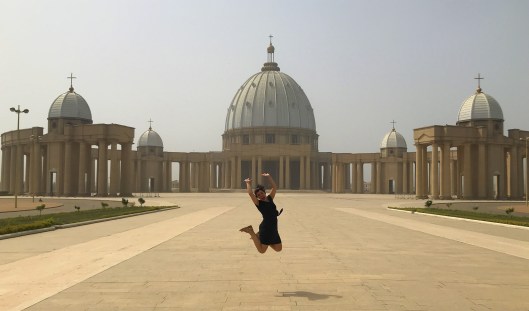 The former president of Cote D’Ivoire, Felix Houphouet-Boigny had an ego problem. In 1985, he decided to spend an inordinate sum of government money building a colossal catholic church in his newly formed capital of Yamassoukro, built on the site of his ancestral village. This Basilica is larger than the Vatican’s St. Peter’s (which is the basis for its design) and is the largest church in the world.It was quite a stunning sight for two reasons. One, just the scope of the building itself, its lavish stained glass windows, and the architecture itself is incredibly impressive. And, more importantly, in an impoverished and struggling country where 3-700 million 1985-dollars could have built infrastructure, and hundreds of schools, universities, clinics, hospitals, and communication facilities to better the lives of it’s people (half of whom are Muslim anyway), it was the grossest and most disturbing misappropriation of financial resources I’ve ever come across.
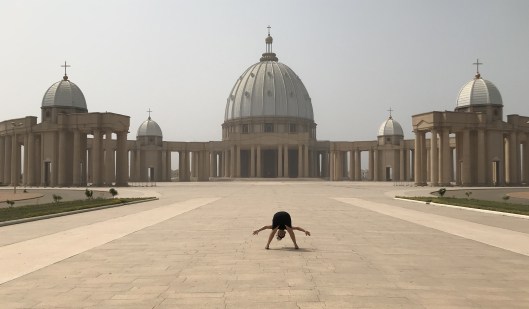 I took some less-than-totally-respectful photos in front of the basilica to illustrate how I felt about this. And Catholicism in general (apologies for offending any sensitive sensibilities here…)
 On arrival, we were approached by armed guards who informed us that the driveway leading to the entrance of the palace was off-limits. Also, the caretaker of the crocodiles was off work on the weekend and so there was no feeding for us to view.
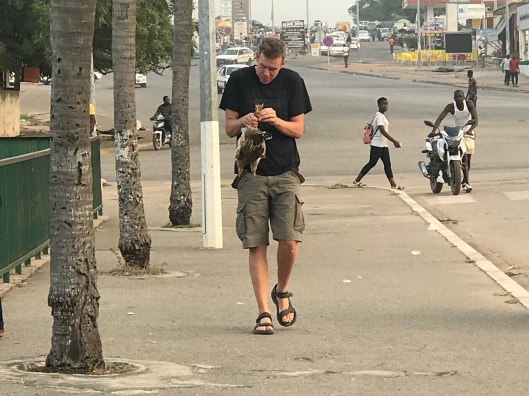 Explanation of the fact that crocodiles would not eat an already-dead chicken as well as pointing out that having one’s head cut off to be eaten by a human or being crunched instantaneously by the powerful jaws of these ancient beasts are literally one-and-the-same was not helping to alleviate the situation and their vehement protests got louder.
 I found the whole thing to be quite funny and an altogether entertaining insight into both crocodiles and human psychology. Eventually, the few folks who objected were told to remove themselves from the area and we all anxiously awaited Mathias’ return with the doomed birds.
 Yamassoukro reminded me very much of Warsaw, Poland during the communist era. Large soviet-style concrete buildings devoid of art in their architecture, wide tree-less streets with broadly spaced urban design. And then there is the famed Presidential Hotel which reminded me of the state-ran Orbis’ hotels that we often had stayed in when I was a kid – with its red carpeted walls and enormous 80’s decorated lobby and monstrosity of an oversized concrete “block” on top of the hotel giving it the appearance of a giant mushroom.
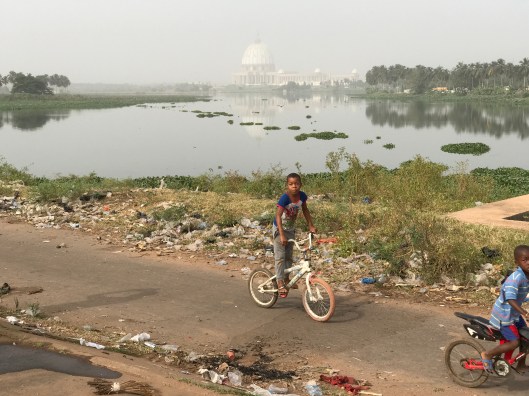 To my delight, a group of us stopped here on our way back from the chicken massacre. Even more thrilling was the fact that I could order a gin and tonic WITH ice at their bar while we waited for the aforementioned mushroom-like restaurant to open. The hotel had a gigantic pool in the back and I sort of wished I’d come here earlier and crashed it.
 It was also a really good group dynamic and I will have very fond memories laughing with Sinead, Mike, Jack, and Mike (the driver) from that evening.
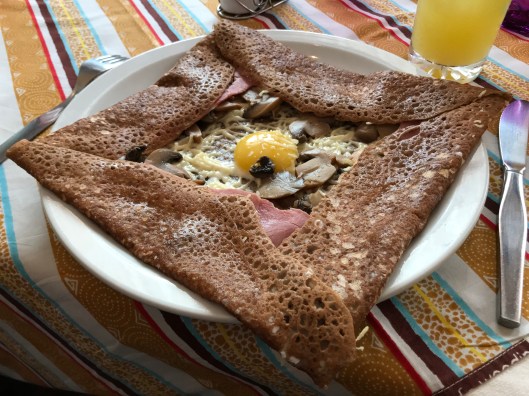 We quickly availed ourselves with a small group to the Crepe restaurant which was ran by a French guy. I split a savory and a sweet crepe with Wayne and they tasted so good they brought tears to my eyes. We also both licked our plates – the food was that good.
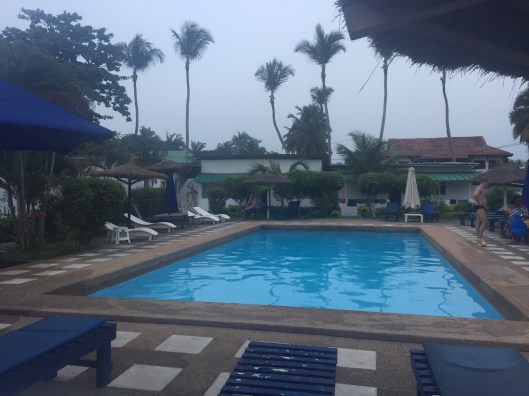 On arrival at our beach hotel, we jumped into the pool with cold beers to alleviate the heat of the day and the long drive in the truck. Thousand of locals were playing, swimming, and socializing on the beach and I had quite an enthusiastic welcome from many of them when I decided to take a walk later that afternoon in my bikini and sarong.
 The day’s culinary delights continued that evening as Danny and I led a group of hungry lesser spotted Dragos to the Vietnamese restaurant we had read about and had what then became the best meal of the last few days. Which even included a velvety creamy chocolate mousse to finish it off. I was super stuffed and happy when I hit my pillow that night.
 Since Grand Bassam was the capital in the late 1800’s – there were a number of older buildings from that era worth a visit, some of which had been converted into museums, others that had trees and vines growing out of and around them. It made for a pleasant stroll, if not interrupted by my growing bathroom requirements which led me to stay close to my room for the remainder of the afternoon.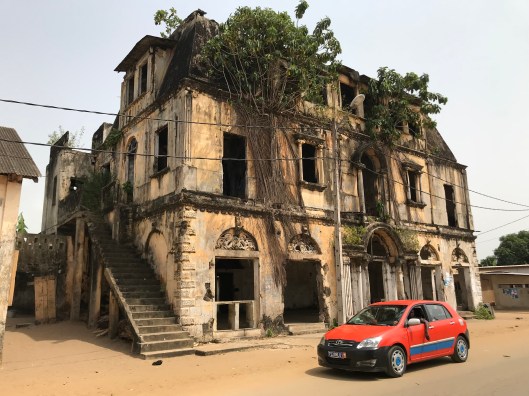
 Having said that, along with almost all of our meals in Ivory Coast, the food was delicious and the giant prawns I’d ordered were extremely tasty and had an incredible buttery/garlic sauce on them which almost made up for the pain in my belly from waiting in hunger for so long.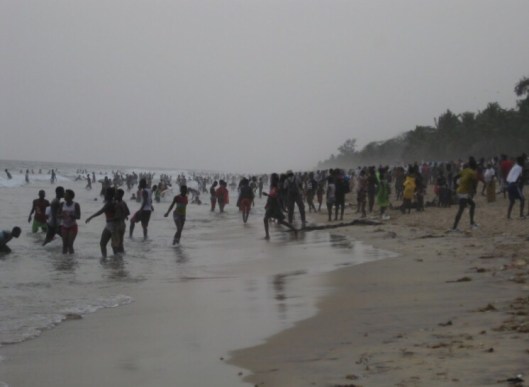





















 Anita Go Travel